February 18, 2026
In today's rapidly evolving corporate ecosystem, sustainability is no longer a buzzword. It's a performance metric, a brand differentiator, and a strategic imperative. Organizations across industries are seeking infrastructure solutions that align with environmental goals while enabling operational excellence. Among the array of structural options available to business leaders, fabric buildings are emerging as a compelling choice that delivers measurable sustainability value without compromising on functionality, scalability, or lifecycle performance.
As companies reevaluate their capital expenditures and long-term asset strategies, they inevitably ask: How can built infrastructure contribute to sustainability goals? How can we reduce environmental impact while maximizing return on investment? How can we deploy facilities that fortify resilience? Fabric buildings, with their optimized material usage, reduced carbon footprint, and enduring performance, have proven to be a pivotal element in the answer to these questions.
Reducing Environmental Impact Through Material Efficiency
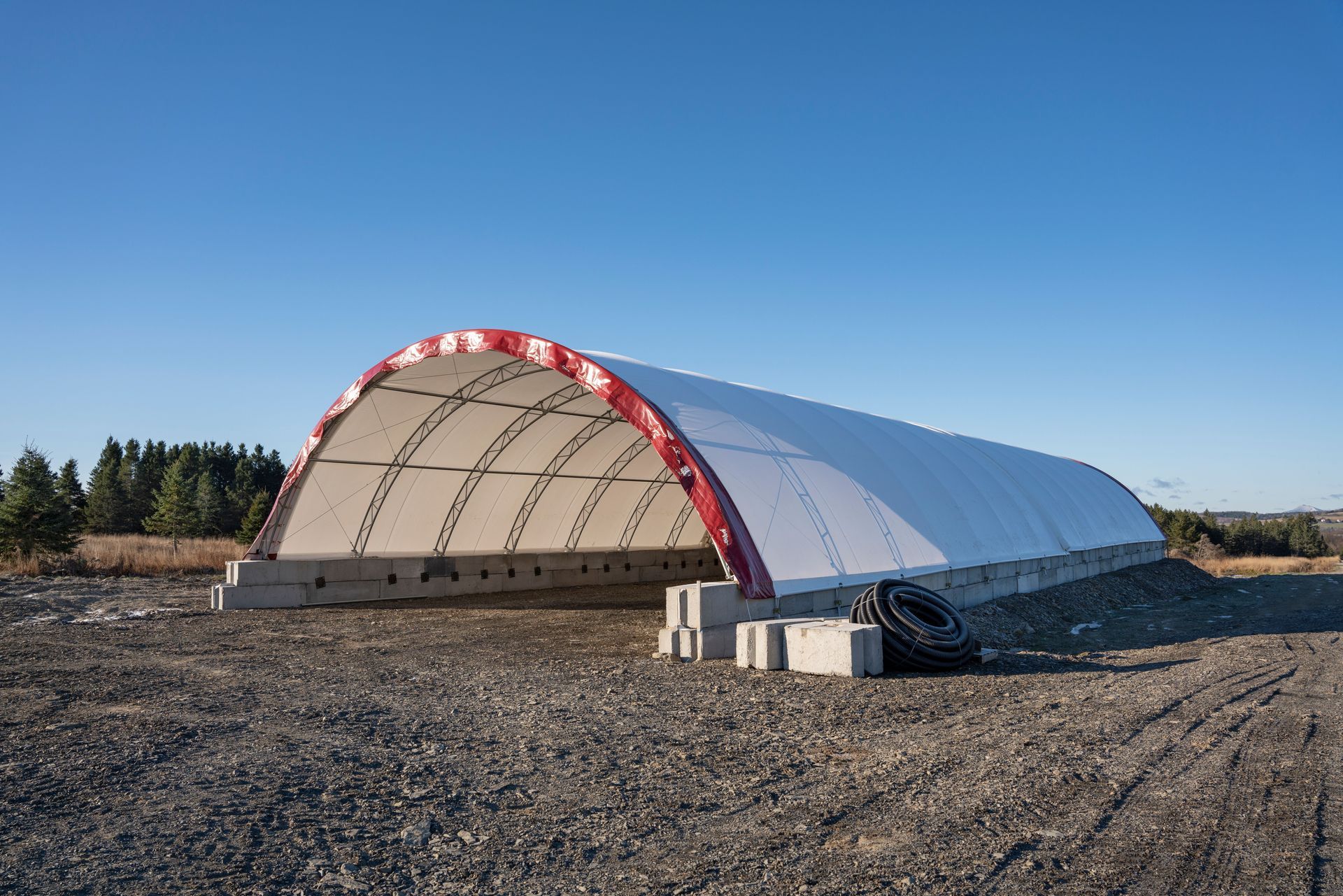
One of the most significant sustainability advantages of fabric buildings is their material efficiency. Traditional construction techniques often rely on heavy volumes of concrete, steel, and other resource-intensive materials. These materials contribute to high embodied carbon, lengthy construction cycles, and substantial waste streams. In contrast, today's fabric buildings leverage lightweight architectural textiles that require less physical material for enclosure while achieving the same, if not superior, performance criteria.
Architectural fabric membranes are engineered to be high-strength yet lightweight, which means fewer resources are consumed during fabrication and transportation. The reduced weight not only lowers the energy demand for installation but also minimizes the construction footprint. Organizations pursuing aggressive environmental targets benefit from this reduction in embodied carbon because it supports corporate environmental reporting metrics and aligns with broader commitments to decarbonization.
Material efficiency in the context of fabric buildings is not an aesthetic choice: it's a strategic investment in sustainable operations. These structures can dramatically reduce a company's environmental impact from Day One, enabling businesses to make measurable progress against sustainability commitments with infrastructure that supports their long-term vision.
Optimizing Energy Performance Through Innovative Design
Sustainability in business infrastructure extends beyond the initial construction phase; it includes ongoing operational efficiency. Fabric buildings support energy performance optimization through design characteristics that improve thermal management and natural light utilization. The translucency of many fabric membranes enables abundant natural daylight to penetrate workspaces, reducing reliance on artificial lighting during peak daylight hours. This inherent design attribute can directly reduce energy consumption and associated utility costs.
The performance engineering of fabric membranes also enhances thermal regulation. Advanced tensile fabrics are designed to provide superior insulation properties, aiding in temperature stability. This can translate into reduced energy demand for heating and cooling systems, especially when the structure is paired with strategic ventilation and shading systems. A fabric building's ability to balance natural light and thermal performance fosters indoor environments that are not only more energy efficient but more comfortable for occupants — a win-win for employee wellbeing and sustainability reporting.
In a corporate world where energy costs often represent a significant operational expense, the ability to lower energy consumption while maintaining high performance is a strong value proposition. When integrated into broader sustainability frameworks, the optimized energy performance of fabric buildings becomes a differentiator that supports competitive advantage and environmental leadership.
Extending Lifecycle Value With Durable Construction
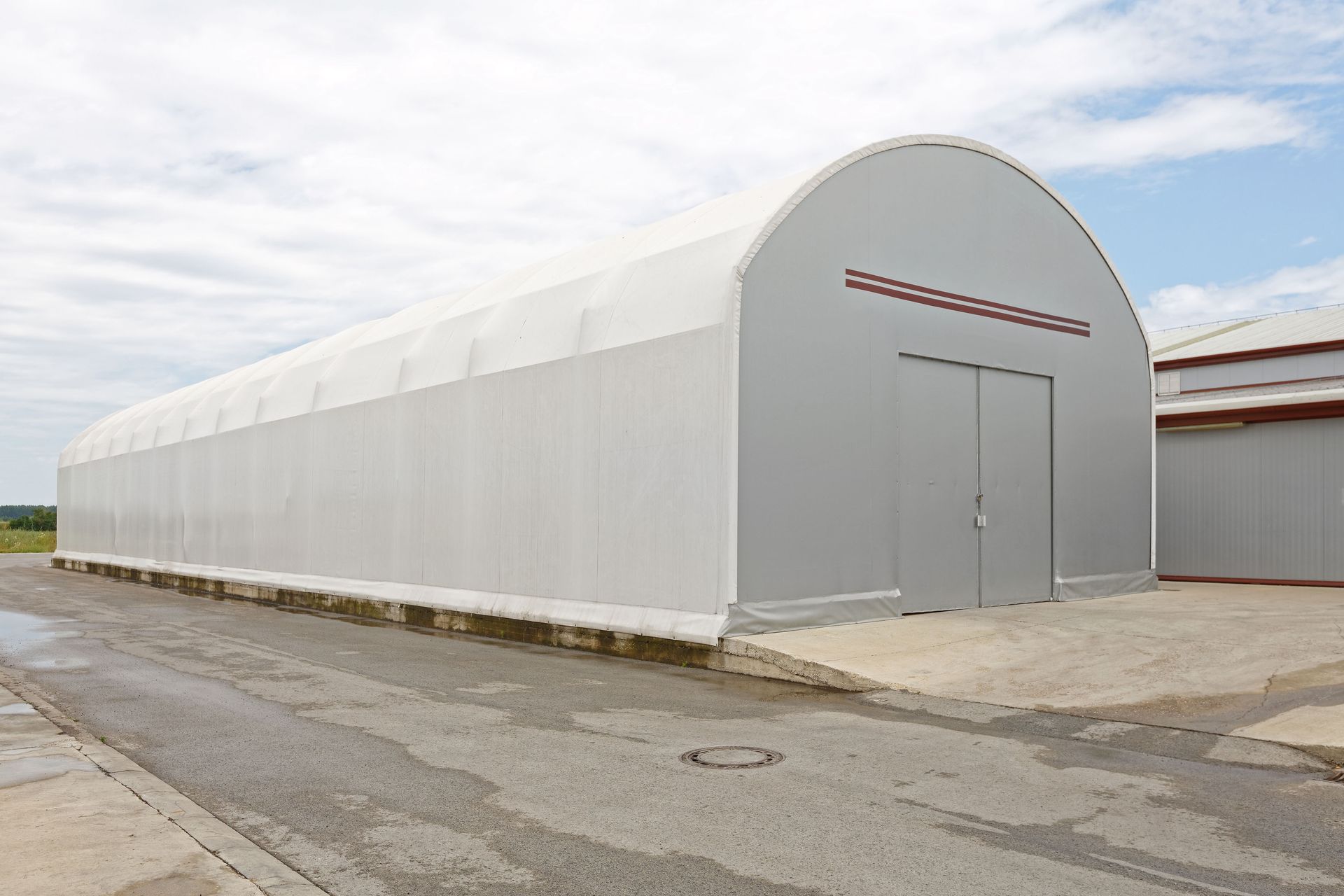
Long-term sustainability is rooted in the durability and lifecycle value of infrastructure assets. Fabric buildings are engineered for resilience. Although they leverage lightweight materials for efficiency, today's fabric structures are designed to last. According to gb&d Magazine, architectural fabric can last 20 to 30 years while the metal frames, masts, and cables will last 50-plus years. This durability profile not only contributes to longer service life but also reduces the frequency of full-scale replacements and associated material waste over time.
For businesses, the extended lifecycle value of fabric buildings means fewer disruptions and lower total cost of ownership. Unlike temporary structures that require frequent refurbishment or replacement, properly designed fabric buildings deliver dependable performance over decades. This reduces the environmental burden associated with demolition, reconstruction, and disposal — critical considerations for sustainability officers and corporate strategists who evaluate infrastructure through the lens of lifecycle impact.
Durability also supports investment certainty. When businesses deploy infrastructure that is built to last, they mitigate the risk of unexpected capital expenditures and operational downtime. This contributes to more predictable financial planning while reinforcing commitments to sustainable asset management.
Supporting Circular Economy Principles Through Adaptive Reuse
Sustainability in business increasingly embraces circular economy principles — designing systems that maximize reuse, reduce waste, and extend the utility of resources. Fabric buildings are uniquely positioned to support these principles through adaptive reuse and flexibility. Whereas traditional brick-and-mortar facilities are static in purpose and difficult to repurpose, fabric buildings can be efficiently deconstructed, relocated, or reconfigured for new applications.
This adaptability aligns with corporate strategies that emphasize agility in response to market demand, supply chain shifts, or evolving operational needs. A fabric building originally purposed for storage can later serve as a workspace, training facility, or logistics hub. The ability to reassign built assets extends their functional life and reduces the need for new construction — a direct embodiment of circular economy thinking.
For businesses with sustainability objectives tied to lifecycle usage and waste reduction, fabric buildings offer a pragmatic solution. They empower organizations to decouple growth from resource extraction by enabling the repeated utilization of structural components across diverse operational contexts.
Enhancing Operational Agility and Business Continuity
In today's volatile business environment, operational agility is a strategic imperative. Sustainability initiatives often intersect with business continuity planning: infrastructure must be resilient not only to environmental stressors but to shifts in market conditions. Fabric buildings support both sustainability and agility through rapid deployment and flexible scalability.
Compared to conventional construction timelines, fabric buildings can be designed, manufactured, and erected in a fraction of the time. This accelerated timeline reduces the duration of construction-related emissions and enables businesses to bring operational capacity online faster — a clear competitive edge. Whether responding to increased demand, expanding into new markets, or stabilizing operations after disruptions, fabric buildings provide a scalable platform that supports resilience.
Furthermore, the modular nature of fabric structures allows companies to adjust capacity without wholesale rebuilding. Businesses can incrementally expand or reconfigure their fabric buildings as strategic needs evolve. This contributes to sustainability by optimizing resource utilization and minimizing the need for redundant infrastructure.
Operational agility also intersects with risk management. Fabric buildings have been engineered to withstand a range of environmental stressors, from high winds to snow loads, ensuring continuity of operations even in challenging weather conditions. When organizations invest in infrastructure that supports business continuity, they inherently strengthen their sustainability posture by safeguarding assets and reducing the likelihood of reactive, resource-intensive repairs.
It's clear that sustainability transcends environmental rhetoric. For businesses, sustainability must be operationalized through infrastructure choices that deliver tangible performance, measurable impact, and long-term value. Fabric buildings represent a convergence of design innovation, material efficiency, lifecycle resilience, and strategic agility — all of which are critical to sustainable business performance. Through reduced material use, enhanced energy performance, durability that extends lifecycle value, and adaptability that supports circular economy principles, fabric buildings enable organizations to meet both sustainability and operational goals. Their rapid deployability and contribution to business continuity further underscore their relevance in a world where resilience is as valued as efficiency. If you're looking for fabric buildings, contact Structures Unlimited LLC today.